Commercial Waste Removal in Queens Park
Commercial waste removal in Queens Park needs to be practical, regular and suited to the mix of premises that rely on tidy back-of-house space, safe access and predictable collections. Our service focuses on the removal of everyday business waste, bulky office items and other non-hazardous materials that need sorting, loading and taking away without disrupting the working day. The aim is straightforward: keep your site clearer, your storage more workable and your disposal process easier to manage.
We handle a range of commercial clearances, from routine office waste to the removal of surplus furniture and mixed items that have built up after a move, refit or seasonal change. Responsible sorting is part of that process, so suitable materials can be separated for reuse or recycling where possible. If you need a one-off uplift or a repeating arrangement, the work can be shaped around your site, access and timing.
For a quick start, use the pages below to explore service types, pricing information and safe disposal guidance. If you already know what needs clearing, you can request a quotation in the simplest way available to you. Clear details help us match the service to the job, especially where the waste includes mixed items or heavier loads.
Business waste support for different workplaces
Commercial waste removal is not one single task. It may involve general office waste, archived paperwork, old shelving, broken fittings or end-of-tenancy items that need collecting from shared corridors, basements or service entrances. A workplace benefits from a clear plan because different materials need different handling, and some items are best separated before they are moved. That keeps the process orderly and helps reduce unnecessary rehandling on site.
Our business waste removal page covers the core service for companies that want reliable clearance of mixed commercial waste and surplus items. When the waste is concentrated in a single department, stockroom or suite, the work can usually be planned as a focused clearance rather than a full premises emptying. This makes it easier to remove only what is ready to go, while leaving live work areas undisturbed.
Common items in this type of work include packaging, office clutter, broken equipment, unsaleable stock and redundant fixtures. Where furniture or fixtures are still reusable, they are best separated from general waste before removal. If your premises has more than one type of material ready for collection, a measured approach helps keep loading efficient and avoids mixing items that could be treated differently later.
Office clearance and workspace recovery
Office clearance often has a different shape from day-to-day waste collection. It may involve desks, chairs, filing units, printers, reception furniture and other fittings that are no longer needed after a reconfiguration or move. In smaller offices, even a modest amount of surplus furniture can affect circulation and storage. In larger workplaces, the main challenge is usually organising the uplift so that items leave in the right sequence and do not block access routes.
Office clearance is useful when a working environment needs a reset rather than a simple bin emptying. It can include item-by-item removal, grouped furniture collections or a broader clear-out of rooms that have accumulated equipment over time. In practice, the service works best when items are identified in advance, especially where there are mixed materials such as wood, metal, plastics and electronics. That gives a clearer picture of the load and the time needed.
If you are preparing an office for handover, refurbishment or downsizing, it helps to separate what stays in use from what is ready for removal. A short inventory, even a basic one, can make it easier to agree the scope. Photographs and a concise description are often enough to begin a quotation, and they can help avoid delays where access, stairways or loading points are likely to affect the work.
Furniture, fixtures and bulky items
Business waste removal frequently includes furniture that is too large for ordinary disposal routes. Desks, cabinets, shelving, meeting tables and seating all need safe handling, especially where there are narrow lifts, shared entrances or upper-floor offices. Removing bulky items from commercial premises is usually more about planning and lifting than volume alone, because the route out of the building can matter as much as the item itself.
Furniture disposal and furniture clearance are relevant where the main concern is getting large pieces out of the way in a practical, lawful manner. Some items may be suitable for reuse, while others are better broken down for recycling or disposal depending on condition and material. The service can suit single items as well as grouped office furniture, so it is helpful to say whether the work involves a few pieces or a whole room.
For businesses replacing old fittings, the key decisions are usually what needs removing, whether items must be dismantled and how close the collection point can be brought to the load. That affects labour and access more than the name of the furniture. If an item is fixed in place or part of a built-in arrangement, mention that early so the removal can be planned in a suitable order.
Clearance for stockrooms, garages and storage areas
Commercial premises often build up waste in back rooms, storage cupboards, garages or underused areas that are not part of the public-facing workspace. These spaces are easy to ignore until they become difficult to use. A targeted clearance can help recover floor space and make it easier to store stock, equipment or archive material in a more orderly way. The work may involve mixed items rather than a single category of waste.
Garage clearance can be relevant to businesses that use a garage or similar outbuilding for tools, spare materials or overflow storage. The same general approach also applies to other cluttered service spaces, where items may include shelving, boxes, broken accessories and redundant equipment. Keeping the waste types separate before loading is useful when the area contains a blend of recyclable material and general refuse.
- Identify what must go and what must stay.
- Check whether anything is fragile, awkward or fixed in place.
- Note access routes, parking limits and any time restrictions.
- Group similar items together if you can do so safely.
Waste removal for premises upgrades and refurbishments
Commercial premises often generate waste during refurbishment, redecoration or fit-out work. Old fixtures, packaging, broken shelves, offcuts and stripped-out materials can accumulate quickly, and they are usually best removed in stages rather than left until the end. That helps keep the work area safer and reduces the chance of new materials being damaged by leftover waste. A flexible waste removal arrangement can support a cleaner handover between trades.
Builders waste clearance suits jobs that produce mixed renovation waste rather than ordinary office rubbish. Although the main service on this page is commercial waste removal, refurbishment-related loads are often part of the same operational picture for businesses. A careful approach matters because materials can differ in weight, sharpness and disposal route. The more clearly the waste is described, the better the clearance can be matched to it.
Price is commonly influenced by the amount of waste, the type of items, the ease of access and whether anything needs dismantling before it can be taken out. These factors are usually more important than a simple count of bags or pieces. If a premises is being altered in phases, it can also help to schedule collections around milestones rather than trying to remove everything in one movement.
Office and business waste planning
Commercial waste removal works best when the process is simple to organise. Many businesses prefer to have waste identified before the collection date so that staff can keep their own responsibilities clear and the removal team can work efficiently. This is especially useful in shared buildings, managed offices and premises with tight loading windows, where timing and access matter. It also helps keep the clearance focused on the materials that are actually ready to go.
Pricing and quotes information is useful when you want to understand how a collection is assessed before booking. A quotation will usually reflect the type of waste, the volume, the labour required and any access constraints. If you can describe the items accurately, it is easier to compare options and decide whether the work needs a small targeted collection or a broader commercial clear-out.
We also recommend checking whether any materials are confidential, fragile or physically difficult to move. Paper records, screens, broken shelving and heavier furniture all benefit from different handling. One clear list of what is being removed, plus any known restrictions, is often enough to prepare a sensible estimate and avoid unnecessary back-and-forth.
About Queens Park
Queens Park in northwest London is an area associated with both the park itself and the surrounding neighbourhoods in the City of Westminster and the London Borough of Brent. The park was created in the late nineteenth century and opened in 1887, giving the district a landmark that remains central to its identity. It is one of the main local green spaces in this part of London, with open lawns, tree cover and leisure facilities that sit within a dense urban setting. The wider area has a mixed residential character, with terraces, mansion blocks and later apartment buildings reflecting different phases of London’s growth. Its streets are arranged around everyday local routes rather than grand civic avenues, which gives the district a practical, lived-in feel. Queens Park station helps connect the neighbourhood to other parts of the capital, and the nearby transport network has long shaped movement through the area. The park and its surroundings also sit close to the boundaries of several better-known districts, which means the locality has a layered identity rather than a single uniform centre. Over time, this has made Queens Park a place where green space, housing and local services sit closely together, with the park acting as both a recreational focus and a named reference point for the community.
Commercial waste streams and special handling

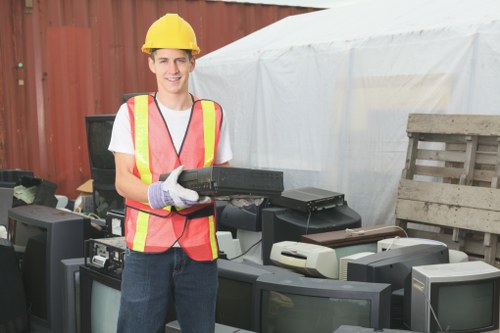
Some commercial waste streams need more care than standard office rubbish. Items such as appliances, screens, compact electronics, mixed metal fittings and similar materials may need separating before removal because they are awkward to carry, prone to damage or better handled in a particular way. A sensible commercial clearance will identify these items early so they can be loaded safely and directed into the most suitable disposal route available.
Fridge and appliance removal is relevant where businesses are replacing kitchen equipment, break-room appliances or other powered items. Confidential shredding may be useful when paper records need secure destruction rather than ordinary paper disposal. In some cases, a workplace may need both services as part of a wider clear-out, but they remain distinct tasks and should be described separately so the right handling can be arranged.
Where a collection includes awkward or heavy items, it helps to say whether they are freestanding, plugged in, fixed down or stored in a tight space. That practical information often matters more than the room name. If the load includes electronics, office waste and furniture together, each category can be noted so the removal remains orderly from start to finish.
Safe disposal, reuse and environmental choices
For many businesses, the value of commercial waste removal is not only in getting items taken away but in making better decisions about what happens next. Some items may still be usable elsewhere, some may be suitable for material recovery and some will need ordinary disposal. Keeping those distinctions in mind can make the process more responsible without making it complicated. A clear sort at the source helps everyone involved understand what is being removed and why.
Recycling and sustainability explains how suitable materials can be separated and directed onward where possible. In practice, this can matter for cardboard, metals, reusable furniture and other common commercial materials. It is not a promise that every item can be recycled, but it does show how the service can support better waste decisions when the load contains more than one material type. The aim is practical reuse or recovery where that is appropriate.
If you are clearing a workplace gradually, it can be useful to keep reusable items apart from waste as you go. That makes later sorting easier and can reduce the amount of mixed material in the final load. Simple separation is often the most effective way to improve the outcome without adding unnecessary complexity to the collection day.
How to prepare a commercial quotation
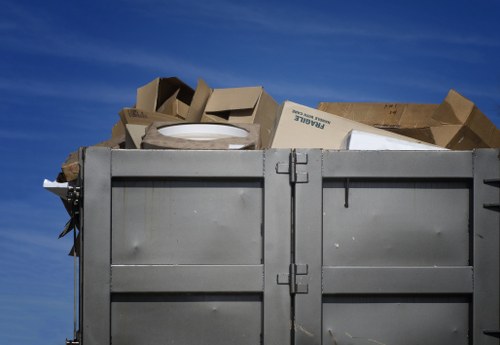
Preparing a quotation for commercial waste removal is usually easier when the waste has been grouped into sensible categories. A brief description of the items, the approximate quantity and the collection location gives a strong starting point. Where possible, tell us whether the material is on one floor or several, whether there are stairs or lifts, and whether the load includes anything especially heavy or awkward. That information helps shape the work accurately.
For a smoother enquiry, it also helps to note any access restrictions, loading bay rules or time windows that apply to your premises. You do not need a long explanation; a focused summary is often enough. If the job is urgent in practical terms, say so plainly, but avoid guessing at the scope. A clear request gives the best basis for a useful quotation and avoids unnecessary revision later.
If you are ready to move ahead, you can request a quotation or use the booking page to share the details of your commercial waste removal needs in Queens Park. We can then review the load, discuss the most suitable service and arrange the next step in a straightforward way. Tell us what needs clearing, and we will take it from there.